---
title: "E-invoicing in 2026: What you need to know"
description: Discover the complexities of mandatory e-invoicing across Europe and our top tips for getting your business ready.
image: https://blog.ibanfirst.com/hubfs/e-invoicing.jpg
---
[Want to see the iBanFirst platform in action? Try the interactive demo](https://hubs.li/Q03kcRW60)
[](https://ibanfirst.com/)
[](https://lu-fr.ibanfirst.com/)
- Solutions
- Why iBanFirst
- Thousands of businesses
chose us
- [Find out why](https://ibanfirst.com/solutions/why-ibanfirst)
- - [Pay suppliers abroad](https://ibanfirst.com/solutions/pay-suppliers-abroad)
- [Get paid in a foreign currency](https://ibanfirst.com/solutions/get-paid-in-a-foreign-currency)
- [Manage intercompany flows](https://ibanfirst.com/solutions/manage-intercompany-flows)
- [Manage international investments](https://ibanfirst.com/solutions/manage-international-investments)
- [Reconcile payments](https://ibanfirst.com/solutions/reconcile-payments)
- Platform
- The iBanFirst
platform
- Safe, easy‒to‒use and
powerful by design.
- [Learn more](https://ibanfirst.com/platform/platform-overview)
- - [Augmented currency accounts](https://ibanfirst.com/platform/augmented-currency-accounts)
- [Cross-border payments](https://ibanfirst.com/platform/cross-border-payments)
- [International payment tracking](https://ibanfirst.com/platform/international-payment-tracking)
- [Currency risk management](https://ibanfirst.com/platform/currency-risk-management)
- [Integrations and automation](https://ibanfirst.com/platform/integrations-and-automation)
- [Security](https://ibanfirst.com/platform/security)
- [Accounts and setup](https://ibanfirst.com/platform/accounts-and-setup)
- [Claude MCP for Excel](https://ibanfirst.com/platform/claude-mcp-excel)
- Resources
- Learning hub
- [Blog](https://blog.ibanfirst.com/en)
- [Resource library](https://ibanfirst.com/resource-library)
- [Currency reference centre](https://ibanfirst.com/currency-reference-centre)
- [Glossary](https://ibanfirst.com/glossary)
- Tools
- [Savings calculator](https://ibanfirst.com/savings-calculator)
- [FX risk management simulator](https://ibanfirst.com/hedging-simulator)
- [iBanChecker](https://ibanfirst.com/iban-checker)
- [Help centre](https://support.ibanfirst.com/en)
- [FAQ](https://ibanfirst.com/faq)
- About us
- [Company](https://ibanfirst.com/about-us)
- [Careers](https://ibanfirst.com/careers)
- [Become a partner](https://ibanfirst.com/become-a-partner)
- [Newsroom](https://ibanfirst.com/newsroom)
- [Login](https://platform.ibanfirst.com/)
[](https://hubspot-cta-redirect-eu1-prod.s3.amazonaws.com/cta/redirect/3853195/a7891481-8241-4265-a081-adb4b745069e)
en
- 
Global
\-
English
- 
Belgïe
\-
Nederlands
- 
Belgique
\-
Français
- 
България
\-
български
- 
Deutschland
\-
Deutsch
- 
España
\-
Español
- 
France
\-
Français
- 
Italia
\-
Italiano
- 
Luxembourg
\-
English
- 
Luxembourg
\-
Français
- 
Magyarország
\-
Magyar
- 
Nederland
\-
Nederlands
- 
România
\-
Română
- 
United Kingdom
\-
English
 6 min read
# E-invoicing in 2026: What you need to know
[Blog](https://blog.ibanfirst.com/en) 
[Future of Finance](https://blog.ibanfirst.com/en/tag/future-of-finance#topics-list)

Publication date
18 December 2025
Jump straight to
- [What is e-invoicing?](https://blog.ibanfirst.com/en/e-invoicing-need-to-knows#what%20is%20it)
- [What is mandatory e-invoicing?](https://blog.ibanfirst.com/en/e-invoicing-need-to-knows#mandatory)
- [Benefits of e-invoicing for business leaders](https://blog.ibanfirst.com/en/e-invoicing-need-to-knows#benefits)
- [When does your business need to comply with mandatory e-invoicing?](https://blog.ibanfirst.com/en/e-invoicing-need-to-knows#when)
- [Prepare your business in 5 steps](https://blog.ibanfirst.com/en/e-invoicing-need-to-knows#steps)
- [Manage your international payments with ease](https://blog.ibanfirst.com/en/e-invoicing-need-to-knows#choose%20us)
Share this article
[](http://www.linkedin.com/shareArticle?mini=true&url=https%3A%2F%2Fblog.ibanfirst.com%2Fen%2Fe-invoicing-need-to-knows%3Futm_medium%3Dsocial%26utm_source%3Dlinkedin) [](https://twitter.com/intent/tweet?original_referer=https%3A%2F%2Fblog.ibanfirst.com%2Fen%2Fe-invoicing-need-to-knows%3Futm_medium%3Dsocial%26utm_source%3Dtwitter&url=https%3A%2F%2Fblog.ibanfirst.com%2Fen%2Fe-invoicing-need-to-knows%3Futm_medium%3Dsocial%26utm_source%3Dtwitter&source=tweetbutton&text=) [](http://www.facebook.com/share.php?u=https%3A%2F%2Fblog.ibanfirst.com%2Fen%2Fe-invoicing-need-to-knows%3Futm_medium%3Dsocial%26utm_source%3Dfacebook)
Publication date
18 December 2025
Just when you thought you'd mastered cross-border compliance, another curveball comes along: enter mandatory e-invoicing.
E-invoicing mandates are rolling out across Europe at different speeds, creating a compliance patchwork that could impact your cash flow, operational efficiency, and — let's be honest — your sanity.
The good news? Countries are implementing these changes in phases, giving you some leeway to prepare your team and business. The less-than-good news? Each country has its own requirements and timeline. So if you operate in multiple European markets, you'll need to juggle different compliance dates and technical standards.
Here's what you actually need to know about e-invoicing in each of the major European markets and what to do about it, giving you everything you need to plan your approach.
## What is e-invoicing?
Starting with the obvious question: What is e-invoicing?
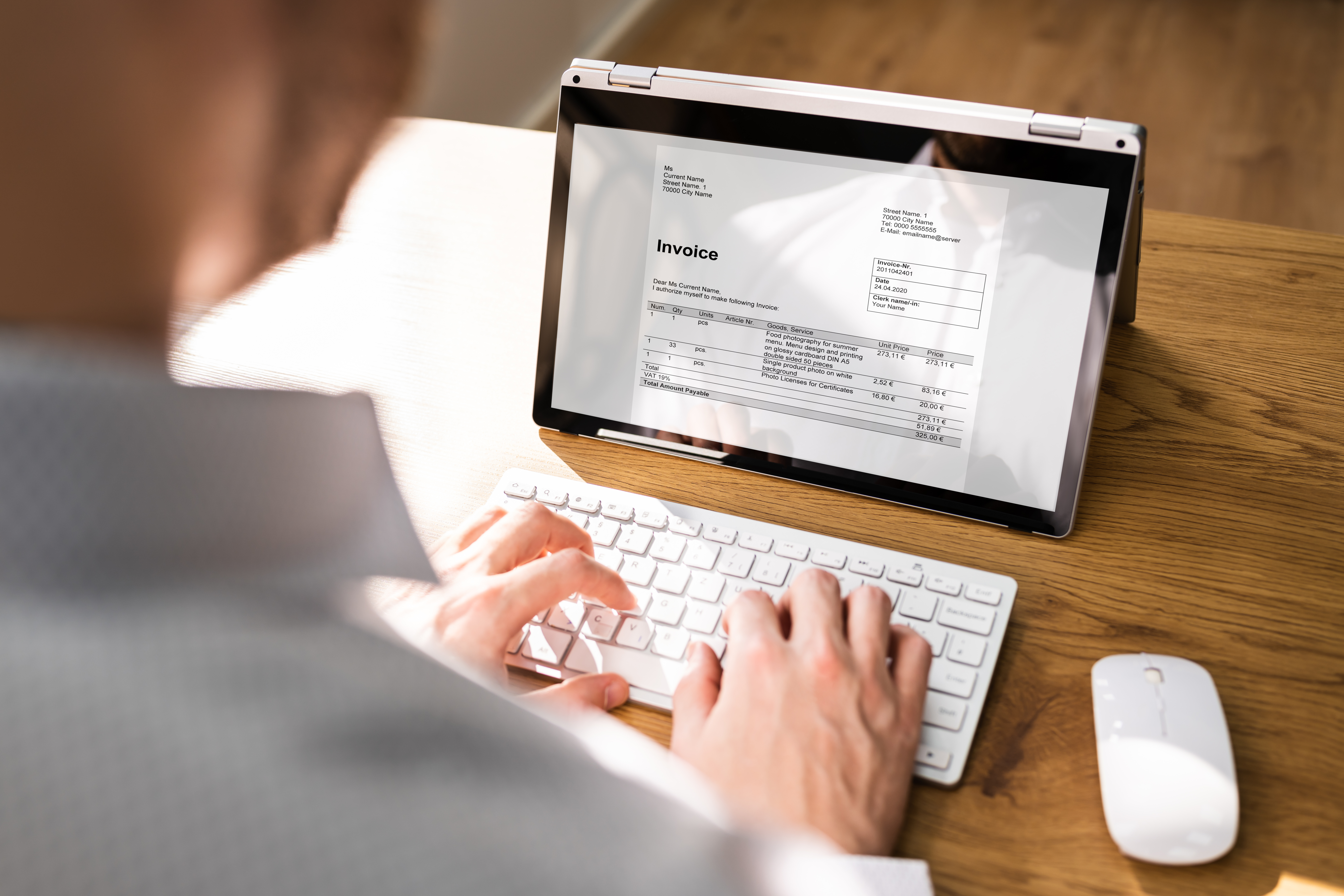
E-invoicing is when a supplier provides a buyer with an electronic invoice in a structured data format that can be recognised and processed automatically. Rather than requiring a human to manually enter data from a standard invoice, your financial system reads all of the relevant invoice details for you. The data flows directly from your supplier's system into yours — no rekeying, no scanning, no manual data entry.
### What about PDFs sent via email?
Today, it’s more than likely that you’re sending and receiving invoices as PDF files via email. Because PDF is a semi-structured format, it can be somewhat automated thanks to optical character recognition (OCR) technology. But here’s the thing: sending PDF invoices is not e-invoicing in the truest sense. Why? Because PDFs still require OCR or humans to extract data. The formatting isn't standardised and there's no guarantee the data will integrate seamlessly with the recipient’s accounting software.
## What is mandatory e-invoicing?
A key part of the e-invoicing discussion: it’s not optional. Many European countries will require businesses to issue and receive invoices in specific electronic formats for certain types of transactions, primarily:
- **Business-to-government (B2G)**: Transactions with public sector entities
- **Business-to-business (B2B)**: Transactions between companies
Why the change? Member states are rolling out changes to meet the [EU’s VAT in the Digital Age (ViDA) requirements.](https://taxation-customs.ec.europa.eu/taxation/vat/vat-digital-age-vida_en) The aim is to standardise and modernise VAT compliance by enhancing collection processes, improving data accuracy and mitigating the risk of fraud.
The European e-invoicing standard ([EN 16931](https://ec.europa.eu/digital-building-blocks/sites/spaces/DIGITAL/pages/467108950/EN+16931+compliance)) sets out what makes an invoice compliant. Handily, many modern e-invoicing platforms support multiple compliant formats — so you don't need to become an XML expert overnight.
### What it means for your business
That said, the operational changes required to meet this standard are still significant:
- **Multi-country complexity**: As mentioned, if you operate across borders, you'll potentially need to juggle different formats, platforms and deadlines simultaneously.
- **Timeline pressures**: Depending on where you operate, you may already have obligations to switch to a compliant solution or will very soon.
- **Process changes**: Your finance teams may need to establish new workflows for invoice approval, exception handling and reconciliation processes.
- **System upgrades**: Depending on your current invoicing software, you may need to integrate with accredited platforms or upgrade your ERP system.
## Benefits of e-invoicing for business leaders
Here's the thing about regulatory changes: they're often a pain in the short term. But e-invoicing is one of those cases where the benefits could outweigh the hassle — once you get past the implementation headache. Here’s how.
### Reduce errors and operational risk
Errors caused by manual data entry can be a real thorn in your side. Consider how many times you've had to edit payments or chase down a payment dispute because someone typed 1,000 instead of 10,000.
With e-invoicing, manual data entry errors become a thing of the past. Data flows directly from source to system, eliminating those "How did we mess this up?" moments.
Plus, fewer errors mean fewer disputes with suppliers, fewer corrections eating up your team's time, and less risk of compliance issues from incorrect VAT calculations.
### Simplify compliance across markets
If you operate in multiple countries, regulatory compliance probably feels like a never-ending game of catch-up.
Mandatory e-invoicing is here, whether you like it or not — and honestly, once you're set up for one country, the others get exponentially easier.
Plus, when everything's timestamped, structured and stored electronically, year-end audits become significantly less painful. Your auditors can actually track transactions and verify VAT calculations, rather than chasing down missing invoices.
### Improve visibility into payment status
Right now, your team is probably fielding regular emails from suppliers asking: "Did you receive our invoice?" and "When can we expect payment?" — while simultaneously also sending the same questions to your customers.
With structured e-invoicing systems, all parties can see where an invoice is in the process. Your suppliers can confirm you've received their invoice. You can track when your customers have received yours. Payment disputes decrease because there's a clear trail showing what was sent, when, and what happened to it.
When you're managing hundreds or thousands of invoices across multiple countries and currencies, that visibility matters. You can identify bottlenecks faster, forecast cash flow more accurately, and respond to supplier queries without having to dig through email threads or chase down information from different departments.
## When does your business need to comply with mandatory e-invoicing?
Let's break down what's happening in some of the key European markets.
- **Belgium:** Starting 1 January 2026, Belgium will introduce mandatory e-invoicing for all B2B transactions in line with the European standard EN 16931. Peppol is the primary format and transmission method.
- **Bulgaria**: There is no B2B mandate currently.
- **France:** Large and medium-sized businesses must issue and receive e-invoices from September 2026, with smaller businesses following in September 2027. Only structured electronic formats (such as XML or Factur-X) will be accepted and they must pass through a partner dematerialisation platform (PDP) or the public invoicing platform (PPF).
- **Germany:** All businesses are already required to receive e-invoices, while mandatory issuing will be phased in from January 2027 for companies with €800,000+ turnover and January 2028 for all businesses. XRechnung and ZUGFeRD (from version 2.0.1 onward) are accepted, as they provide the required tax information in a structured format.
- **Hungary:** There is no B2B mandate currently.
- **Italy:** Mandatory e-invoicing has been in place since 2019 for all B2G and B2B transactions via the SDI (Sistema di Interscambio) platform.
- **Netherlands:** A partial B2G e-invoicing mandate exists in the Netherlands, but not for B2B transactions. It is accepted on a voluntary basis (with consent from the buyer).
- **Portugal**: Unlike B2G transactions, there is currently no requirement for B2B e-invoicing in Portugal. Businesses can choose any invoice format they prefer, as long as both parties agree to it.
- **Romania:** All VAT-registered businesses have been using e-invoicing for B2B transactions via the RO e-Factura platform since 2024.
- **Spain:** Large companies with a turnover of €8 million or more are already required to comply, with small and medium-sized companies mandated from early 2026.
- **UK:** All VAT-registered businesses will need to issue e-invoices from 2029 for B2B and B2G transactions, giving businesses several years to prepare. An implementation roadmap is to be published as part of the 2026 Budget.
The pattern is clear: if you operate in multiple European markets, you'll be dealing with rolling compliance deadlines for the next five years. So what are the key actions you need to take?
## How to prepare your business in 5 steps
Here are five steps to get your business compliance-ready:
### **1. Audit your current invoicing systems**
Start with an honest assessment of where you are today. Here are some questions to help you get started:
- Can your current ERP or accounting software generate structured e-invoices in required formats for each country you operate in?
- Do you have the technical capability to receive and automatically process e-invoices?
- How many invoices do you issue monthly in each country? How many do you receive? What's the average value?
- Which suppliers and customers represent your highest volumes?
- Does your business qualify as large, medium or small in each jurisdiction?
### **2. Understand your specific obligations**
As we’ve seen, not all countries have the same e-invoicing requirements. Some are B2G only, others B2B. Some have already been introduced. Others are coming later. Understanding what your obligations are in each country helps you phase your implementation.
Consider how you process invoices too. Your suppliers need to be able to send you compliant e-invoices, so you may need to assess your suppliers’ readiness as well as your own.
### **3. Choose your e-invoicing solution**
This is where your audit pays off. Having identified what your current capabilities are and knowing what obligations apply to your business, you can decide on the best e-invoicing solution for your business.
If you operate in multiple markets, look for solutions that support all (or at least most) of your geographies. Otherwise, you’ll get stuck managing numerous country-specific platforms.
Remember that some countries require you to use government-approved intermediaries. These platforms (like France's PDPs and Italy's SDI-compatible service providers) handle format conversion, validation and transmission to tax authorities. This may narrow down the list of solutions to choose from.
### **4. Prepare your finance team**
Technology is only half the battle. Your internal teams will need to adapt to these changes too.
Make sure someone on your team understands the regulatory requirements or hire a compliance advisor who can track regulatory changes and can keep you in the know as the landscape evolves.
You may want to create a project plan with milestones for each country. Build in buffer time before regulatory deadlines and assign clear ownership of tasks and regions — like who's responsible for each country's compliance.
Your accounts payable and receivable teams will need hands-on training with new systems and time to test new workflows. And month-end close procedures may need some adjustment.
### **5. Test and implement in stages**
Don't try to go live everywhere at once. Instead, choose one country, ideally where you have the most urgent deadline or highest volume, and test your processes and systems with a small group of suppliers and customers first. Learn from what went wrong (there's usually something) and apply those lessons to your next country rollout.
## Manage your international payments with ease
These regulatory changes are undeniably headache-inducing. But once you're through implementation, the operational benefits — time savings, reduced risk, better cash flow visibility — really kick in.
iBanFirst arms small and medium-sized multinationals (SMMs) like you with a simple yet powerful platform so you can take control of your international payments, currencies, margins and cash flow.
**With an iBanFirst account, you can:**
- [Hold, send, and receive funds in 25+ currencies](https://ibanfirst.com/platform/augmented-currency-accounts) from a single dashboard
- [Track international payments in real time](https://ibanfirst.com/platform/international-payment-tracking) with shareable tracking links
- [Lock in exchange rates with forward payment contracts](https://ibanfirst.com/platform/currency-risk-management) to protect margins
- [View cash positions across](https://ibanfirst.com/platform/augmented-currency-accounts) all entities to make better decisions
- [Integrate payment workflows](https://ibanfirst.com/platform/integrations-and-automation) with your ERP or accounting software for easier reconciliation
[Request an account](https://info.ibanfirst.com/en/request-an-account) to see how iBanFirst simplifies international operations, or[take the interactive product tour](https://ibanfirst.com/product-tour) to explore the platform yourself.
**Topics**
[Future of Finance](https://blog.ibanfirst.com/en/tag/future-of-finance#topics-list)
## You might enjoy...
[](https://blog.ibanfirst.com/en/best-cfo-fintech-stack)
[Future of Finance](https://blog.ibanfirst.com/en/tag/future-of-finance) + 1
[Tools, tips & tricks](https://blog.ibanfirst.com/en/tag/tools-tips-tricks)
 7 min read
### [The best software for CFOs in 2026 (with 14 top tools)](https://blog.ibanfirst.com/en/best-cfo-fintech-stack)
[](https://blog.ibanfirst.com/en/are-we-witnessing-a-protracted-fall-in-the-eur-ils)
[FX Market News](https://blog.ibanfirst.com/en/tag/fx-market-news)
 3 min read
### [Are we witnessing a protracted fall in the EUR/ILS?](https://blog.ibanfirst.com/en/are-we-witnessing-a-protracted-fall-in-the-eur-ils)
[](https://blog.ibanfirst.com/en/what-are-psd1-and-psd2-and-why-are-they-important)
[Future of Finance](https://blog.ibanfirst.com/en/tag/future-of-finance)
 2 min read
### [What do PSD1 and PSD2 mean and why are they important?](https://blog.ibanfirst.com/en/what-are-psd1-and-psd2-and-why-are-they-important)
## Get started today
[](https://hubspot-cta-redirect-eu1-prod.s3.amazonaws.com/cta/redirect/3853195/9d50d108-747a-47d5-9035-55fef1a23fe7)[](https://hubspot-cta-redirect-eu1-prod.s3.amazonaws.com/cta/redirect/3853195/71322db8-3dc1-47ea-b55f-0e02cf2505cd)
[](https://ibanfirst.com/)
[Trustpilot](https://uk.trustpilot.com/review/ibanfirst.com)
### Stay in the know
Get the latest FX news, tips, and best practices to help you shape your borderless future.
- Solutions
- [Why iBanFirst](https://ibanfirst.com/solutions/why-ibanfirst)
- [Pay suppliers abroad](https://ibanfirst.com/solutions/pay-suppliers-abroad)
- [Get paid in a foreign currency](https://ibanfirst.com/solutions/get-paid-in-a-foreign-currency)
- [Manage intercompany flows](https://ibanfirst.com/solutions/manage-intercompany-flows)
- [Manage international investments](https://ibanfirst.com/solutions/manage-international-investments)
- [Reconcile payments](https://ibanfirst.com/solutions/reconcile-payments)
- Resources
- [Blog](https://blog.ibanfirst.com/en)
- [Savings calculator](https://ibanfirst.com/savings-calculator)
- [FX risk management simulator](https://ibanfirst.com/fx-risk-management-simulator)
- [Resource library](https://ibanfirst.com/resource-library)
- [Currency reference centre](https://ibanfirst.com/currency-reference-centre)
- [iBanChecker](https://ibanfirst.com/iban-checker)
- [Help centre](https://support.ibanfirst.com/en)
- [Glossary](https://ibanfirst.com/glossary)
- [FAQ](https://ibanfirst.com/faq)
- Platform
- [The iBanFirst platform](https://ibanfirst.com/platform/platform-overview)
- [Augmented currency accounts](https://ibanfirst.com/platform/augmented-currency-accounts)
- [Cross-border payments](https://ibanfirst.com/platform/cross-border-payments)
- [International payment tracking](https://ibanfirst.com/platform/international-payment-tracking)
- [Currency risk management](https://ibanfirst.com/platform/currency-risk-management)
- [Integrations and automation](https://ibanfirst.com/platform/currency-risk-management)
- [Security](https://ibanfirst.com/platform/security)
- [Accounts and setup](https://ibanfirst.com/platform/accounts-and-setup)
- About us
- [Company](https://ibanfirst.com/about-us)
- [Careers](https://ibanfirst.com/careers)
- [Become a partner](https://ibanfirst.com/become-a-partner)
- [Newsroom](https://ibanfirst.com/newsroom)
- - [](https://www.linkedin.com/company/ibanfirst/)
- [](https://www.youtube.com/channel/UC75gB3H0uUvKd4L1k8W_dhg)
- [](https://www.instagram.com/iban1st/?hl=fr)
[Trustpilot](https://uk.trustpilot.com/review/ibanfirst.com)
### Stay in the know
Get the latest FX news, tips, and best practices to help you shape your borderless future.
© iBanFirst.com 2026
- [Privacy Policy](https://ibanfirst.com/privacy-policy)
- [Cookie Policy](https://ibanfirst.com/cookie-policy)
- [Terms of use](https://ibanfirst.com/terms/)
- [Legal](https://ibanfirst.com/legal/)
- [Complaints](https://ibanfirst.com/complaints)
- [Whistleblowing](https://ibanfirst.com/whistleblowing)
- [Fees](https://ibanfirst.com/fees/)
- [PSD2 API](https://ibanfirst.com/open-api/)
- [API Doc](https://docs.ibanfirst.com/)
- [Security acknowledgements](https://ibanfirst.com/hall-of-fame.html)
- [Security Policy](https://ibanfirst.com/security-policy.html)
iBanFirst S.A. is duly authorised and regulated by the National Bank of Belgium (under company number 0849.872.824) as a payment institution. Our registered address is at Avenue Louise 489, 1050 Brussels, Belgium. The products and services that iBanFirst S.A. offers are limited to unregulated spot FX transactions and deliverable forward payment contracts (forward payment, flexible forward payment and dynamic forward payment) excluded from MiFID and EMIR regulation, as they are intended to cover an underlying future payment for identifiable goods and services. iBanFirst S.A. does not offer options or any other financial instruments for investment or speculative purposes.
```json
{
"@context" : "https://schema.org",
"@type" : "BlogPosting",
"author" : {
"@type" : "Person",
"name" : "iBanFirst",
"url" : "https://blog.ibanfirst.com/en/author/ibanfirst"
},
"dateModified" : "2025-12-18T11:40:48.826Z",
"datePublished" : "2025-12-18T09:11:51.000Z",
"headline" : "E-invoicing in 2026: What you need to know",
"image" : [ "https://blog.ibanfirst.com/hubfs/e-invoicing.jpg" ],
"mainEntityOfPage" : {
"@id" : "https://blog.ibanfirst.com/en/e-invoicing-need-to-knows",
"@type" : "WebPage"
},
"publisher" : {
"@type" : "Organization",
"logo" : {
"@type" : "ImageObject",
"url" : "https://blog.ibanfirst.com/hubfs/iBanFirst2025_logo_Tagline_WhiteBackground.png"
},
"name" : "iBanFirst"
}
}
```