





Publication date


Your international payment may have arrived. So why is your supplier still waiting?
If you've ever sent an international payment only for your supplier to say the money hasn't arrived yet, the payment may already have reached their bank. The remaining delay often comes from the processing and crediting of funds by the beneficiary bank.
The answer often lies in final-mile processing: the time between the beneficiary bank receiving the payment and crediting the funds to the recipient’s account.
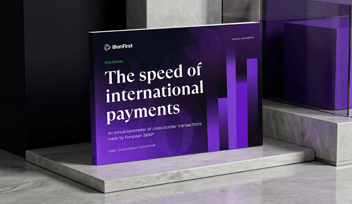
The latest speed of international payments barometer explores this often-overlooked part of the payment journey; the final mile. Now in its second year, our barometer analyses more than 250,000 SWIFT payments, compared with nearly 190,000 payments in the previous report. That larger dataset makes it easier to identify structural patterns.
One finding is particularly clear: a significant share of processing time occurs after a payment reaches the beneficiary bank.
Reaching the beneficiary bank is not the same as receiving the money
An international payment usually passes through several stages before the beneficiary can use the funds:
- The sender releases the payment.
- The payment provider checks the payment details, beneficiary information and any required documentation.
- The payment travels through the relevant network e.g. SWIFT.
- In many cases, payments go through one or more intermediary banks.
- The beneficiary’s bank receives and processes the payment.
That final step may take minutes, hours or longer. And the beneficiary can only use the funds once their bank has credited the payment to their account.
Here's why this stage deserves closer attention:
- SWIFT reports that 75% of payments reached the beneficiary bank within 10 minutes.
- SWIFT also reports that 80% of total processing time took place during final-mile processing.
- We found that 73% of finalised payments settled within 24 hours.
A payment can therefore cross borders quickly and still wait for the beneficiary bank to complete its processing.
This distinction also features in the G20’s targets for cross-border payments. By the end of 2027, the target is for 75% of cross-border payments to reach the recipient within one hour, with the remainder settled within one business day.
Why does the final mile take time?
Once a payment reaches the beneficiary bank, the bank may still need to complete several steps before making the funds available.
- A payment that reaches the beneficiary bank outside local working hours may not be processed until the next working day. Local cut-off times, public holidays and time-zone differences can all affect when processing takes place.
- The bank needs to match the payment to the correct beneficiary account. If the account name, IBAN, payment reference or other details do not match, the bank may need to investigate further.
- The beneficiary bank may need to complete routine compliance, security or operational checks.
- Not every payment moves through the bank’s systems automatically. Exceptions, new beneficiaries or unusual payment details can trigger manual checks, adding time to the final stage.
- The bank may process incoming payments in batches or through several internal systems.
A final-mile delay does not necessarily mean that the payment has been lost or that the payment network has failed. It may simply mean that the beneficiary bank is still completing the steps required to credit the payment.
What can finance teams do to reduce payment delays?
You cannot control the beneficiary bank’s internal processing time. However, you can reduce avoidable delays and give your team and suppliers better visibility.
Send payments early
For time-sensitive payments, give the payment enough time to pass through different time zones, cut-off times and processing windows.
The barometer found that 8–9am CET was the best-performing hour on average. Sending payments before 10am from Monday to Wednesday also gave businesses the best chance of same-day processing.
It may help to prepare payment information the day before you send it, including:
- Beneficiary details
- Payment amounts
- Invoices and supporting documents
- Any required purpose codes
For more detail, read our analysis of the best and worst times to make international payments.
Check payment details before release
An incorrect IBAN, BIC, account name or payment reference can create additional checks. Some corridors also require a complete purpose code.
Check these details before you release the payment. A few minutes of preparation can prevent hours or days of avoidable delay.
Correct information can help the beneficiary bank identify and process the payment without requesting clarification or carrying out additional manual checks.
Remove internal approval delays
The payment journey can lose time before the payment even reaches the network.
An approver may be unavailable, miss a notification or need to complete an additional review for a new beneficiary. For time-sensitive payments, agree an escalation process in advance:
- Who can approve the payment if the main approver is unavailable?
- How quickly should an urgent payment be reviewed?
- Which supporting documents should the payment team prepare in advance?
A clear internal process can prevent avoidable delays before the payment starts its international journey.
Plan around the final mile
If a payment needs to arrive by a specific deadline, do not schedule it for the last possible moment.
Build a buffer into important payment timelines and consider the beneficiary bank’s local working hours. Reaching the beneficiary bank does not necessarily mean that the funds are already available to the recipient.
This matters particularly when you are paying suppliers, meeting contractual deadlines or coordinating deliveries across time zones.
Track the payment after you send it
When a payment takes longer than expected, the most useful question is not simply, “Where is my money?” It is, “Which stage has the payment reached?”
Tracking will not make the final mile faster. However, it can show you whether the payment has reached an intermediary or beneficiary bank and help you understand where the delay sits.
The iBanFirst Payment Tracker provides timestamped updates throughout the SWIFT payment journey, including when the payment reaches intermediary and beneficiary banks. You can also share tracking links with your beneficiaries, so suppliers receive the same information rather than waiting without an update.
Speed means more than reaching the bank
International payments continue to get faster. SWIFT GPI has improved the speed and traceability of cross-border payments, while near-instant payment infrastructure continues to expand.
But end-to-end speed depends on more than the payment network. A payment can reach the beneficiary’s bank within minutes and still take longer to become available to the recipient.
The final mile remains the biggest processing hurdle in the payment journey. Understanding that final stage helps you set more realistic expectations, reduce avoidable delays and plan important payments with greater confidence.
The 2026 Speed of International Payments Barometer builds on the first edition with a second year of data, showing which patterns remain consistent across payment corridors.
Want to see how fast your payments move? Use our payment speed calculator to estimate delivery times for your own payment routes.
Topics